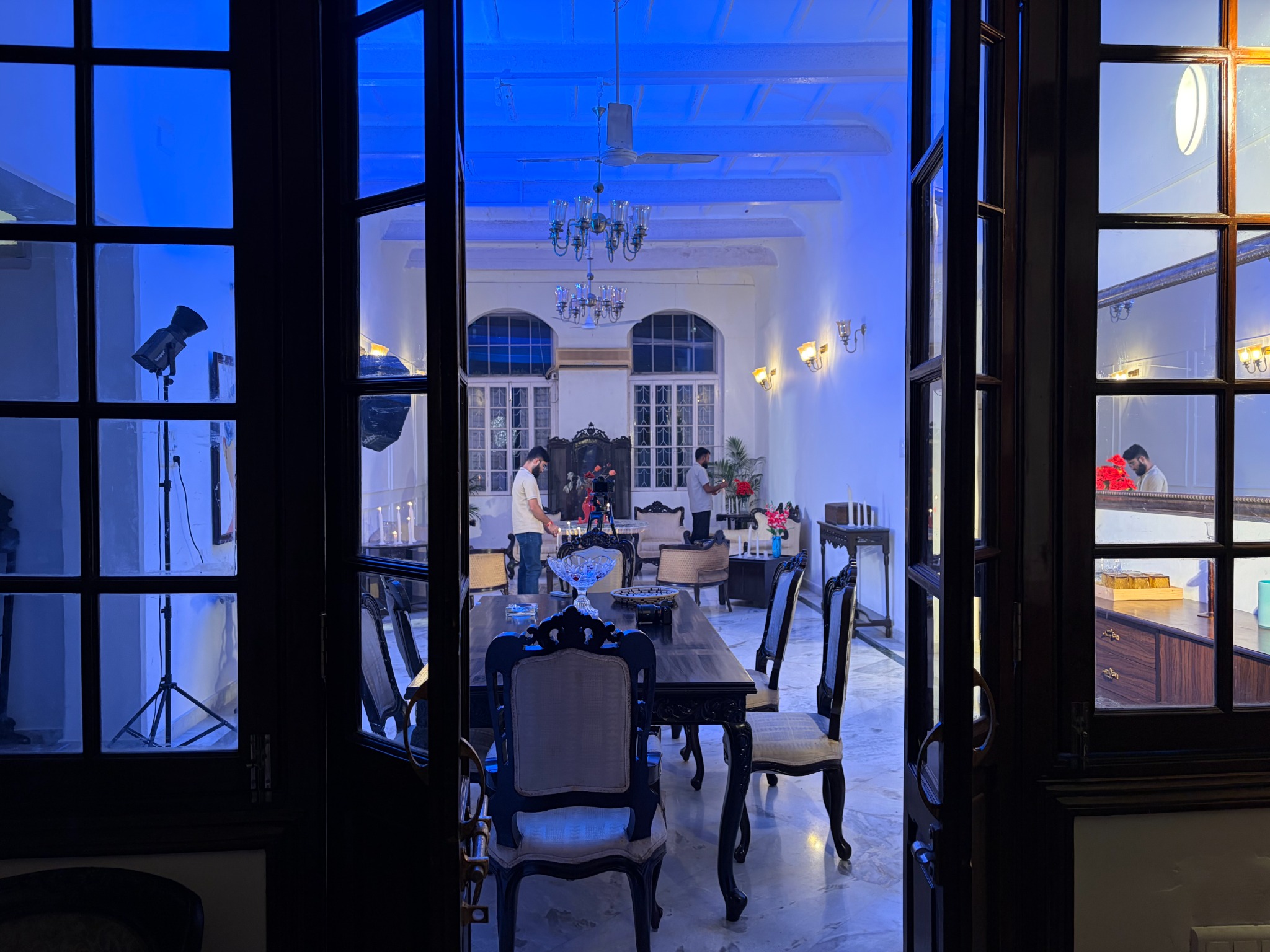
A finished photograph hides almost everything that made it possible. It hides the empty room before the team arrived, the first lighting test that failed, the furniture moved by a few inches, the cable just outside the frame and the quiet conversation that helped a muse understand the scene.
Our behind-the-scenes photographs from Day Two preserve that invisible labour.
Building twelve sets in one day
Every new look required changes in light, camera position, colour balance and direction. Even when the location remained the same, the psychology had to change. A dining room photographed for scale could later become a narrow study of hands, fabric and candlelight.
The team worked through twelve sets for four muses, adapting continuously while protecting the calm needed in front of the camera.
Why we show the process
Behind-the-scenes material is not only proof of production. It helps viewers understand that cinematic photography is constructed through choices. When we share the process, we share the thinking, patience and human work behind the final image.