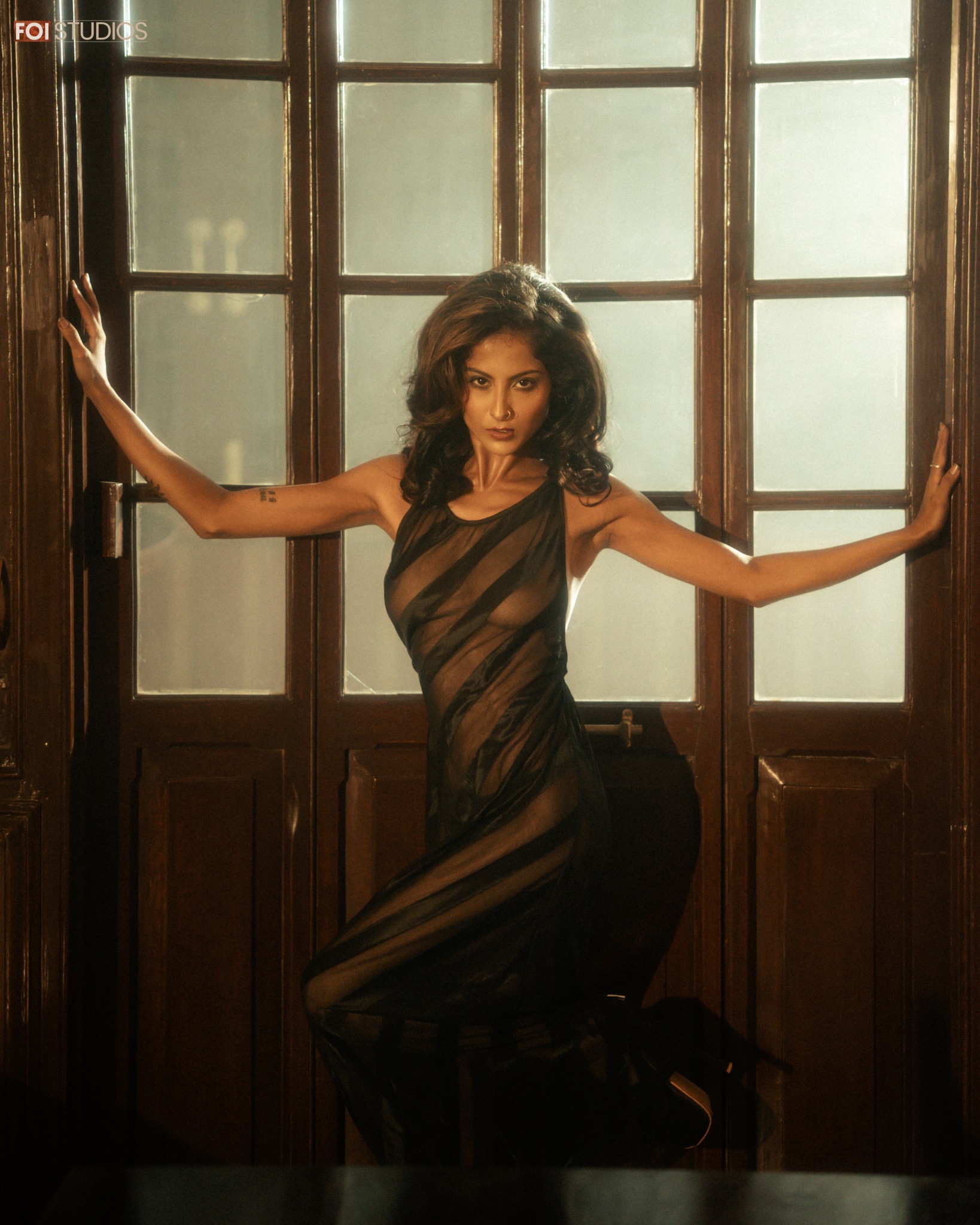
A group project can easily become a repeated formula: the same room, the same light, the same pose and a different face. We wanted the opposite. The Hundredth Chamber needed to feel like twelve separate stories connected by one architecture.
Each muse arrived with her own rhythm. Our first responsibility was to observe before directing. Confidence does not look the same on every person. Stillness can feel tender, guarded, powerful or mysterious depending on who carries it.
Four different emotional centres
Aayu’s world was built around ember, gold and intensity. Swapna moved between archival softness and warm intimacy. Poulomi brought directness, texture and quiet self-possession. Debpriya transformed the room through command, shadow and the visual authority of the collector cover.
Three looks were created for each muse, but styling was never the complete story. Expression, distance from the camera, the direction of the body and the relationship with the room changed with every set.
The person before the picture
The strongest portrait is not the one that forces a subject into a reference. It is the one that allows the artist’s vision and the subject’s individuality to meet. That meeting became the real structure of our twelve stories.