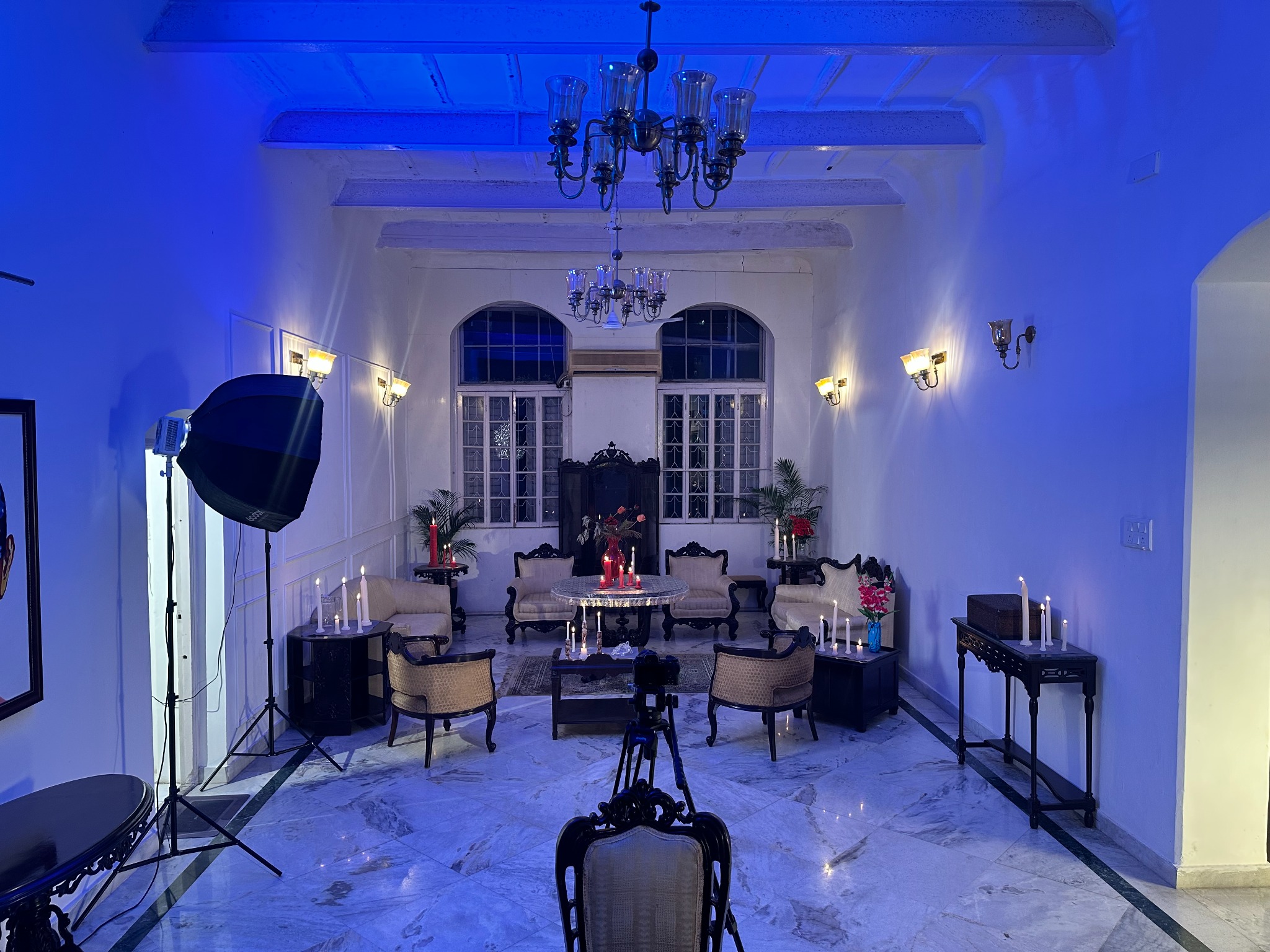
A location is never only a background. It decides how a person moves, where the shadows fall and what kind of silence exists around the frame. For The Hundredth Chamber, we searched for a place that could feel private, historical and cinematic without becoming theatrical.
The selected salon offered a grand dining hall, tall dark windows, high ceilings, white beams, chandeliers, marble floors and carved furniture. Beyond it were quieter spaces: a bedroom, a sunroom and arched passages that allowed the story to breathe.
Turning architecture into emotion
The dining hall gave us scale and ceremony. The windows created separation between warm interior light and the blue outside world. The smaller rooms offered closeness, while the passageways suggested transition, as if every muse were moving between memory and the present.
We did not try to hide the age of the space. Reflections, imperfect walls, dark wood and long sightlines became part of the visual language.
A chamber, not a set
By the time the first portrait was made, the location no longer felt like a rented room. Through light, candles, flowers, wardrobe and direction, it had become The Hundredth Chamber: a world with its own atmosphere and emotional rules.