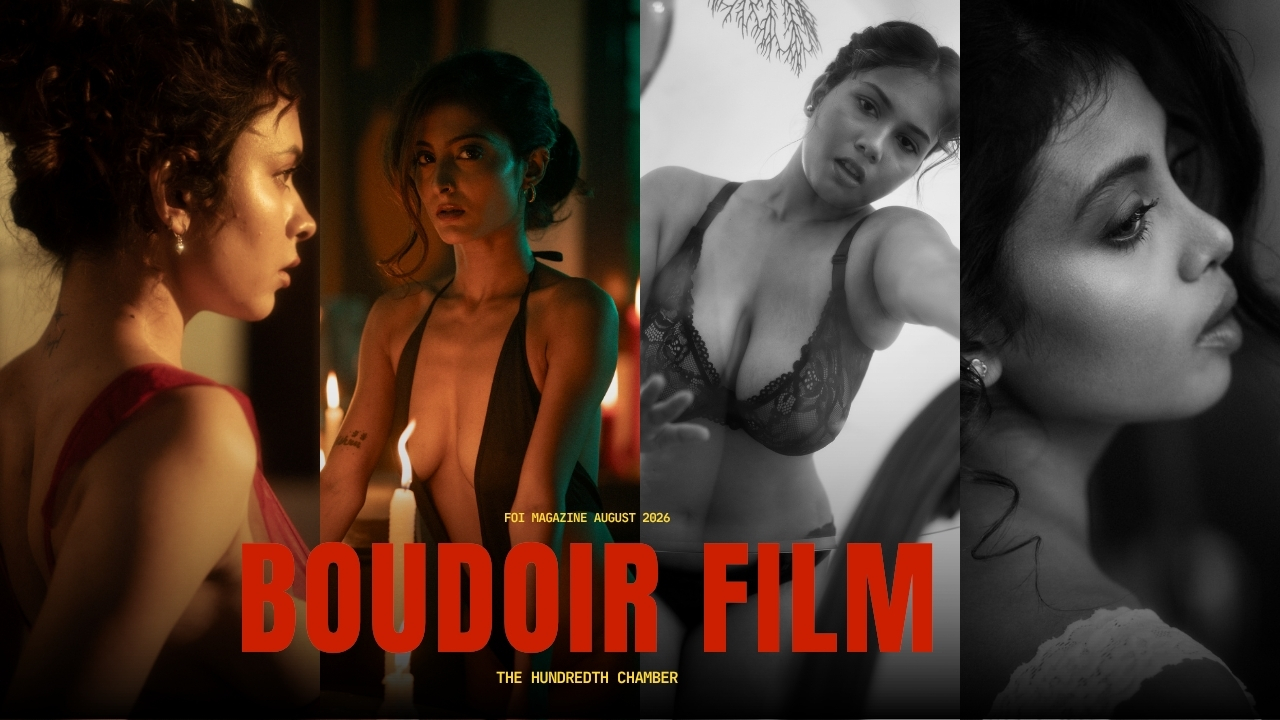
Photography asks us to choose the moment that contains the complete feeling. Cinema asks a different question: what happens before that moment arrives, and what remains after it leaves?
For The Hundredth Chamber films, movement was directed as an extension of portraiture. A turn of the face, a hand finding the edge of a table or a pause beside a candle could carry more meaning than a large performance.
Movement without losing intimacy
The camera was not there to interrupt the private atmosphere built for the still photographs. Selected motion sequences used a 35 mm cinema prime to remain close to the person while preserving enough of the room to hold the story.
The result is not a behind-the-scenes record and not a slideshow of poses. Each film is its own portrait, built from gesture, duration, colour and music.
The room begins to breathe
When the curtains move, candle flames change and a muse crosses from shadow into warm light, the architecture becomes alive. That living relationship between person and place is why The Hundredth Chamber needed to move.