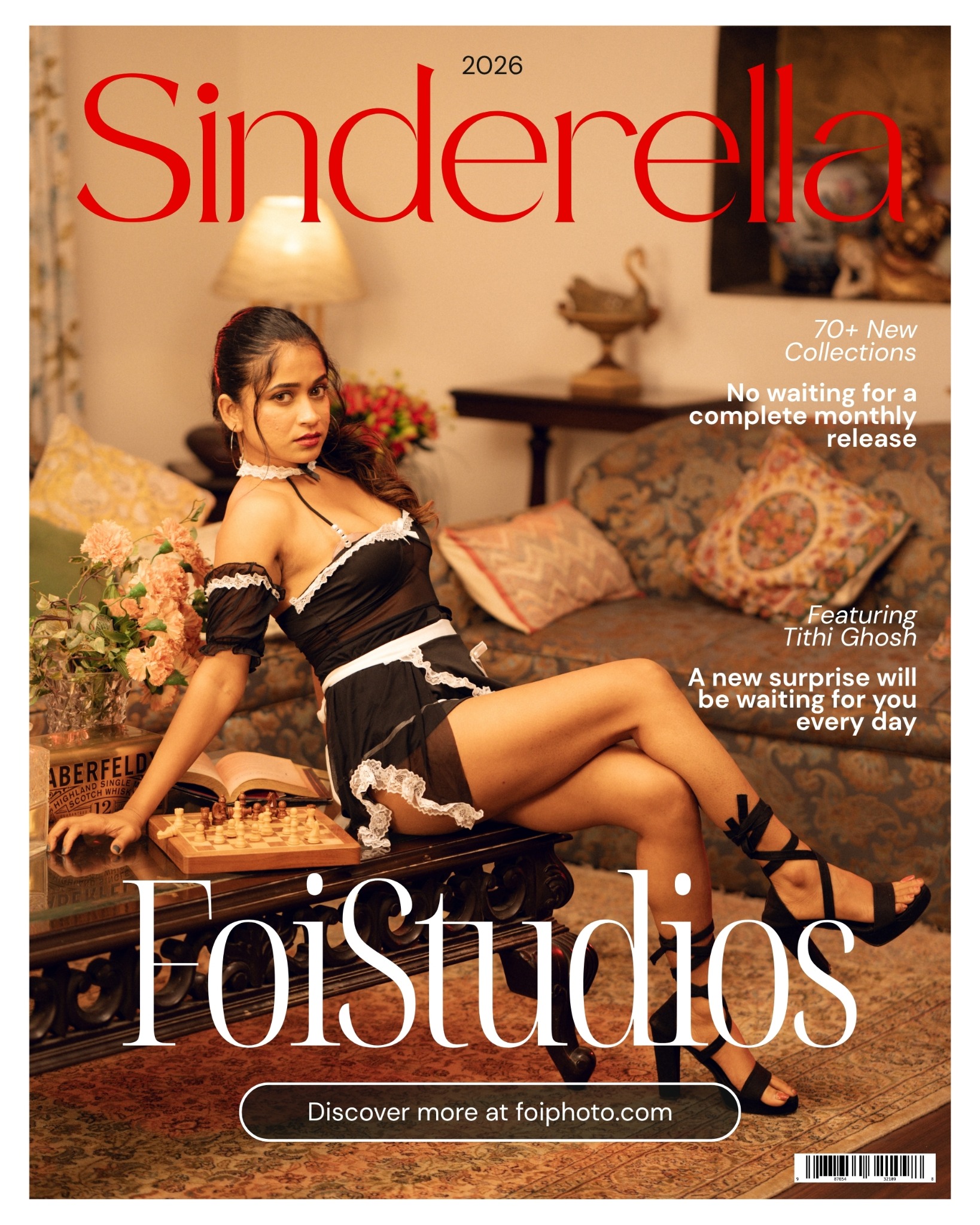
A product photograph answers direct questions: what is the silhouette, how does the material sit and what details are visible? A magazine cover asks a different question: what does this collection feel like before the viewer knows anything else? Sinderella needed both kinds of clarity.
During production, we protected clean views of each look while also searching for the frame that could carry title, typography and narrative. Negative space, eye line and the relationship between body and furniture all changed when a photograph had to become a cover.
Design begins in the camera
Typography cannot rescue a frame that gives it nowhere to live. We composed selected photographs with the future cover in mind, leaving areas of quieter tone and making sure the muse remained powerful even after text entered the image.
The oversized Sinderella wordmark turns the cover into an announcement, while smaller editorial notes create the feeling of a continuing publication rather than a one-time advertisement.
A campaign with its own publication life
The covers let each muse lead a chapter and allow the campaign to travel through FOI Magazine, FOI.ONE and social formats without losing its visual authority.
When photography and design are planned together, a product look becomes more than documentation. It becomes an issue, a chapter and an object the audience can remember.